





Choosing a digital marketing agency can feel difficult when every company promises better rankings, more traffic, and higher sales. Without clear examples, business owners may struggle to decide which services deserve their investment. The search for client case aelftech com leads to Aelftech’s published case studies, which describe projects involving SEO, paid advertising, and website performance. Understanding these examples can help readers identify useful marketing strategies, examine reported outcomes, and ask better questions before hiring an agency.
What Is Client Case Aelftech Com?
Client case Aelftech com refers to the case-study section published on Aelftech’s official website, where the agency describes selected digital marketing projects and their reported results.
Aelftech presents itself as a digital marketing agency serving businesses across the United States. Its website lists services such as search engine optimization (SEO), pay-per-click advertising (PPC), social media marketing, WordPress development, and digital strategy.
The agency’s published portfolio includes four main examples covering local SEO, e-commerce SEO, business-to-business software advertising, and website speed optimization. These examples explain the challenges, methods, and results the company associates with each project.
Readers can visit the official Aelftech case-study page to review the original descriptions.
It is important to distinguish company-reported results from independently verified performance. The published figures provide information about what Aelftech claims to have achieved, but they should not automatically be treated as independently confirmed outcomes.
What Services Do Aelftech’s Client Cases Cover?
The client case Aelftech com portfolio focuses on different parts of digital marketing. Each example addresses a particular business problem rather than relying on one strategy for every client.
The main service areas include:
- Local SEO: Improving visibility in location-based searches and Google Maps.
- E-commerce SEO: Helping online stores attract relevant organic traffic.
- PPC management: Improving paid advertising efficiency and lead quality.
- WordPress development: Improving website speed, technical performance, and usability.
- Digital strategy: Connecting marketing activities with measurable business objectives.
These services can work together. For example, an online retailer may need technical SEO, helpful product content, and paid campaigns to attract customers while building long-term organic visibility.
However, the right combination depends on the business’s goals, budget, competition, and current website performance.
Aelftech Client Case Studies at a Glance
The following table summarizes the four examples described on the official case-study page.
| Case study | Business type | Main challenge | Reported approach | Reported outcome |
| Local SEO | HVAC and plumbing business | Weak local search visibility | Google Business Profile optimization, directory corrections, and location pages | 215% increase in organic calls through Google Maps |
| E-commerce SEO | Fashion and apparel brand | Dependence on paid social advertising | Technical fixes, structured data, content clusters, and link building | 450% growth in non-branded organic traffic |
| B2B PPC | Financial technology software company | High cost per lead | Negative keywords, audience targeting, and landing-page improvements | Cost per lead fell from $450 to $115 |
| Website optimization | Digital news publisher | Slow loading and poor performance scores | Code optimization, caching, CDN setup, and image conversion | Mobile performance score increased from 32 to 94 |
Source: Aelftech’s official case-study page. These are company-reported figures, not independently verified measurements.
The table shows how different digital marketing problems require different solutions. Local businesses often need stronger location signals, while online stores may benefit from technical improvements and useful content.
Paid advertising requires attention to lead quality and cost, whereas website optimization focuses on delivering content quickly and reliably.
How Did Aelftech Approach Local SEO?
Local SEO helps businesses appear when people search for services in a specific location. It can be especially useful for plumbers, HVAC contractors, electricians, restaurants, and other businesses that serve defined geographic areas.
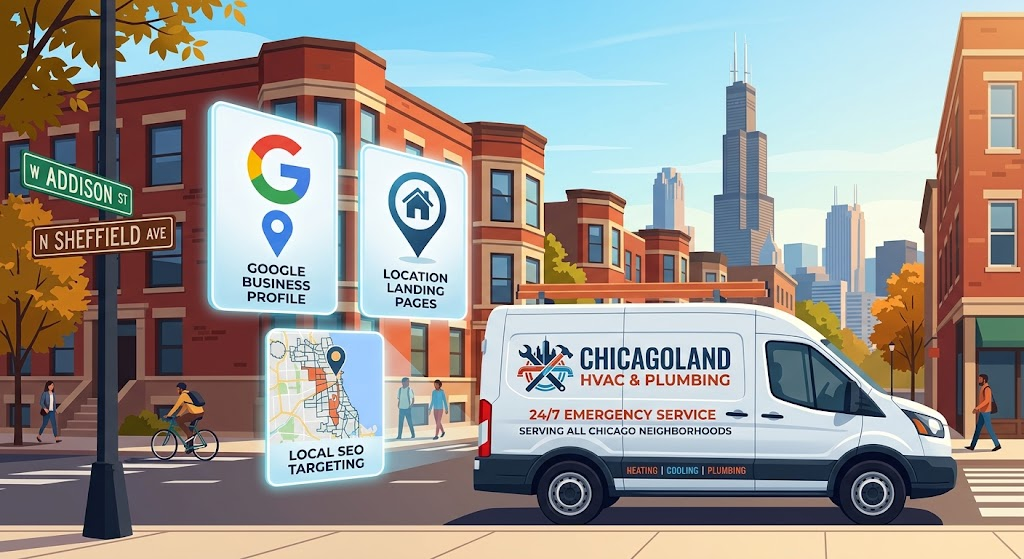
According to the published case study, an HVAC and plumbing business in Chicago struggled to gain visibility in local search results. Aelftech describes three main activities used to address this problem.
Google Business Profile optimization
Aelftech reports updating the business profile, improving categories, adding photos, and working on review generation.
A complete and accurate profile helps customers understand a business’s services, location, contact details, and reputation. Businesses should ensure that all information remains truthful and follows Google’s guidelines.
Business listing corrections
The case study describes correcting business name, address, and phone number information across more than 50 directories.
Consistent information can help customers find the correct business and reduce confusion caused by outdated listings.
Location-specific landing pages
The agency also reports creating pages for areas around Chicago, including Evanston, Oak Park, and Naperville.
These pages can help when they contain genuinely useful information about the services available in each location. Simply duplicating the same content while changing city names offers little value to visitors.
Reported result: Aelftech states that organic calls through Google Maps increased by 215% over six months.
Businesses considering a similar campaign should measure qualified calls, booked jobs, and revenue rather than relying only on rankings.
What Does the E-Commerce SEO Case Study Show?
Online stores often depend on paid advertising to attract visitors. Although paid campaigns can generate traffic quickly, rising advertising costs can reduce profit margins.
In its fashion and apparel example, Aelftech says the client wanted to build a stronger organic search channel. The published strategy combined technical improvements, structured data, content development, and link building.
Technical SEO improvements
The case study reports fixing more than 4,000 crawl errors and implementing structured data for product information.
Technical SEO helps search engines discover and understand important pages. Store owners should also check indexing, canonical URLs, broken links, mobile usability, and duplicate product pages.
Content clusters
Aelftech describes creating a fashion guide section that connected informational content with relevant product categories.
For example, a clothing store could publish a useful guide to choosing seasonal fabrics and link readers to suitable product collections. This approach gives visitors helpful information while making related products easier to discover.
Relevant backlinks
The case study also mentions acquiring links from fashion publications and influencer blogs.
Links can help readers discover useful resources and provide context about a business. However, link acquisition should focus on relevance and editorial value rather than buying links to manipulate rankings.
Reported result: Aelftech claims that non-branded organic traffic grew by 450% over 12 months, with additional revenue attributed to organic search.
These figures are specific to the published example. Other stores may achieve different results depending on product demand, competition, site quality, and execution.
How Did the B2B PPC Campaign Reduce Advertising Costs?
Pay-per-click advertising allows businesses to pay for visits generated through advertisements. It can be useful for software companies seeking qualified leads, but poor targeting can waste money.
Aelftech’s published example describes a financial technology software company spending $15,000 per month on Google Ads while facing a high cost per lead.
The agency reports using three main methods to improve campaign performance.
- Negative keywords: Excluding irrelevant searches, including searches related to free tools, jobs, and templates.
- Audience targeting: Refining audiences to reach people in relevant industries.
- Landing-page improvements: Making the offer clearer and reducing distractions that could prevent visitors from requesting a demonstration.
The case study reports that cost per lead decreased from $450 to $115 within 90 days. It also reports an increase in conversion rate from 2.1% to 8.5%.
These are company-reported figures. Before relying on them, prospective clients should ask how the agency calculated conversions and whether the leads became paying customers.
A lower cost per lead is useful only when lead quality remains strong. Businesses should track qualified leads, sales opportunities, customer acquisition costs, and revenue generated by each campaign.
Why Does Website Speed Matter in Aelftech’s Case Studies?
A slow website can frustrate visitors, delay access to information, and make important actions harder to complete. Performance also matters for mobile users, particularly when pages contain large images, advertising scripts, and other resource-heavy elements.
Aelftech’s website optimization example concerns a digital news publisher that reportedly struggled with Core Web Vitals and slow page loading.
The published solution included:
- Reducing unnecessary CSS and JavaScript work.
- Improving caching.
- Using a content delivery network (CDN).
- Converting images into modern formats such as WebP.
- Reviewing how quickly the main page content appeared.
The case study reports that the mobile performance score increased from 32 to 94 in one month. It also states that Largest Contentful Paint (LCP) decreased from 4.5 seconds to 1.2 seconds.
These measurements describe different aspects of performance. A PageSpeed Insights score is not the same as a direct measurement of every visitor’s experience, so website owners should also review real-user performance data.
For practical guidance, consult Google’s PageSpeed Insights documentation.
What Do These Client Cases Teach Business Owners?
The examples associated with client case Aelftech com highlight several lessons that businesses can apply when planning digital marketing campaigns.
Start with a specific problem
A useful campaign begins with a clear objective. A local contractor might want more qualified calls, while an online store may want to increase profitable organic sales.
A precise goal helps the marketing team select relevant tactics and measure progress.
Establish a baseline
Record performance before making changes. Depending on the campaign, useful baseline measurements may include organic traffic, qualified leads, conversion rate, advertising costs, revenue, and website loading times.
Without a baseline, it becomes difficult to determine whether a campaign produced meaningful improvement.
Choose metrics that match the objective
More traffic does not always mean more sales. Similarly, a higher advertising conversion rate does not necessarily mean a business attracts better customers.
Match each measurement to the intended outcome and assess the quality of the results.
Review performance over an appropriate period
SEO changes may take time to influence organic visibility, while paid advertising data can often be reviewed more quickly. Website performance improvements may become visible as soon as changes are deployed, although real-user measurements can vary.
Set realistic review periods and avoid judging a campaign based on one unusually strong or weak day.
How Can You Verify Aelftech’s Reported Results?
Anyone researching client case Aelftech com should distinguish between information published by the agency and evidence confirmed by an independent source.
The official website provides descriptions of its services and selected projects. However, the published case studies alone do not establish that every reported figure has undergone independent verification.
Before hiring a marketing agency, consider asking for the following information.
- Measurement period: When did the project begin, and which dates were used to calculate the result?
- Starting performance: What were the traffic, lead, revenue, or speed measurements before the work?
- Supporting evidence: Can the agency provide suitable redacted analytics reports or campaign screenshots?
- Measurement method: How did the team attribute calls, leads, and sales to its work?
- Client references: Can the agency connect you with a previous client who agrees to discuss the project?
- Scope of work: Which tasks did the agency complete, and which activities did the client or another provider manage?
- Commercial terms: What fees, timelines, reporting arrangements, and cancellation conditions apply?
A responsible agency should explain its methods, acknowledge limitations, and avoid guaranteeing search rankings or revenue outcomes.
Is Aelftech the Right Digital Marketing Agency for Your Business?
The case studies provide an overview of the services Aelftech says it offers. Whether those services fit a particular business depends on its needs and the evidence available during the evaluation process.
Consider the following factors before making a decision.
Your business goals
Define what success means for your organization. Your goal might be more local enquiries, better e-commerce sales, lower advertising costs, or a faster website.
Relevant experience
Ask to see work involving businesses with similar customers, budgets, competition, and technical requirements.
A successful campaign in one industry does not automatically predict similar results in another.
Reporting and communication
Find out who will manage your account, how frequently you will receive updates, and which metrics will appear in reports.
You should understand what the agency is doing and why each activity matters.
Budget and return on investment
Compare the proposed cost with the expected business value. Include agency fees, advertising spend, software costs, and the internal time needed to support the campaign.
No marketing investment guarantees a particular return, so make decisions using realistic assumptions.
For more information about the company and its stated services, visit the official Aelftech website.
What Should You Check Before Contacting Aelftech?
Researching an agency’s portfolio is only one part of the decision. Before sharing business information or signing a contract, verify the company’s contact details and confirm that the offer matches your requirements.
Aelftech lists its general contact email as admin@aelftech.com on its website. You can also use the contact information displayed on the official contact page.
Before proceeding:
- Confirm the identity of the company and the person handling your enquiry.
- Request a written proposal with a clear scope of work.
- Ask for a realistic timeline and defined reporting schedule.
- Review payment terms, cancellation rules, and ownership of website assets.
- Avoid sharing passwords through unsecured channels.
- Give service providers only the account permissions they need.
These steps apply to any digital marketing provider, not just Aelftech. They help protect your business and create clearer expectations from the beginning.
What Are the Main Limitations of the Published Case Studies?
The published examples are useful for understanding the types of problems Aelftech says it handles. However, readers should consider the limits of the available information before drawing conclusions about the agency’s overall performance.
First, the reported metrics come from the agency’s own case-study pages. The information reviewed for this article does not independently confirm every result.
Second, the summaries do not provide complete datasets for every campaign. Detailed analytics, attribution methods, and all contributing factors are not necessarily available to the public.
Third, digital marketing outcomes depend on many conditions, including competition, seasonality, product quality, pricing, and changes made by the client.
Finally, four selected case studies cannot establish the results every future client should expect.
For these reasons, the most useful approach is to treat the examples as starting points for further questions rather than guarantees of future performance.
How Does Aelftech’s Approach Compare Across Different Marketing Goals?
The best marketing strategy depends on what a business needs to improve. The following comparison connects the published examples with practical objectives.
| Marketing goal | Relevant service | Key measurements | Questions to ask |
| More local enquiries | Local SEO | Qualified calls, booked jobs, local visibility | Which locations and search terms were targeted? |
| More organic store sales | E-commerce SEO | Non-branded traffic, conversion rate, organic revenue | Were technical changes and content updates documented? |
| Lower advertising costs | PPC management | Cost per qualified lead, customer acquisition cost, sales | How was lead quality measured? |
| Faster website loading | Technical optimization | LCP, Core Web Vitals, real-user performance | Were results measured in real-user data as well as lab tests? |
| Better overall growth | Digital strategy | Revenue, profit, qualified leads, customer retention | How will each marketing channel contribute to the goal? |
This comparison makes the portfolio easier to evaluate. Instead of focusing only on impressive percentages, business owners can examine whether each reported outcome relates to a meaningful commercial objective.
What Does Google Recommend for Helpful, Trustworthy Content?
Aelftech’s SEO-related examples also raise an important question: what should businesses expect from a content or SEO strategy?
Google’s published guidance recommends creating helpful, reliable, people-first content rather than producing pages mainly to manipulate rankings.
Businesses can apply this principle by publishing accurate information, answering genuine customer questions, explaining products clearly, and demonstrating relevant experience.
Strong content should also make its authorship and sources clear when appropriate. Claims about performance, expertise, or customer outcomes should have supporting evidence.
Read Google’s official guidance on creating helpful, reliable, people-first content.
Following these principles can improve the quality and usefulness of a website, but it does not guarantee a particular ranking. Search visibility depends on many factors, and competitors may offer equally useful or more relevant content.
Frequently Asked Questions
1. What is client case Aelftech com?
Client case Aelftech com refers to Aelftech’s published case-study section. It describes selected digital marketing projects involving local SEO, e-commerce SEO, paid advertising, and website performance optimization.
2. What services appear in Aelftech’s client case studies?
The published examples cover local search optimization, technical SEO, content development, structured data, PPC campaign management, landing-page improvements, and website speed optimization.
3. Are Aelftech’s reported results independently verified?
The case-study page publishes results attributed to Aelftech’s work. The reviewed material does not independently verify every figure, so prospective clients should request supporting evidence and measurement details.
4. What results does Aelftech report in its local SEO case study?
Aelftech reports a 215% increase in organic calls through Google Maps over six months. This is a company-reported result and should not be treated as a guaranteed outcome for other businesses.
5. Can Aelftech’s strategies help a small business?
The methods described in the case studies may be relevant to small businesses, depending on their goals, location, competition, and budget. Businesses should request a tailored proposal and realistic performance targets before committing to a campaign.
6. Where can readers find Aelftech’s official case studies?
Readers can visit the official Aelftech case-study page. Reviewing the original material is the best way to distinguish the agency’s published claims from commentary elsewhere online.
Conclusion
The search for client case Aelftech com leads to a portfolio describing four areas of digital marketing: local SEO, e-commerce growth, B2B advertising, and website performance. Each example offers a practical way to understand how a marketing campaign can address a specific business challenge.
The reported results are useful starting points, but they do not guarantee similar outcomes for every company. Before choosing an agency, examine the evidence, clarify the scope of work, review reporting methods, and connect campaign goals with measurable business results.