





Understanding Chinese law can feel overwhelming. The rules change fast. The language is complex. And finding reliable information in English? That is even harder. That is where CNLawBlog comes in.
CNLawBlog has become a go-to resource for anyone trying to make sense of China’s legal system. Whether you are a business owner, a law student, or just curious, this platform breaks down complicated topics into simple, readable explanations. It is free. It is updated regularly. And it covers everything from business laws to data privacy.
In this guide, we will explore what CNLawBlog is all about. We will look at the topics it covers, who runs it, and why so many people trust it. By the end, you will know exactly how to use this resource to your advantage.
Let us dive in.
What Exactly Is CNLawBlog?
CNLawBlog is an independent English-language legal blog focused on the PRC legal system. It is built for foreign readers who need to understand Chinese business regulations without drowning in legal jargon. Think of it as a free compass pointing toward China’s regulatory landscape.
The platform does not practice law. It explains it. This is an important distinction. CNLawBlog provides educational content to help you understand your legal environment. But it never replaces actual legal advice from a licensed attorney.
The blog publishes articles on many topics. These include PIPL (Personal Information Protection Law), FDI (Foreign Direct Investment) rules, the Chinese Civil Code, and IP protection through CNIPA. It operates across multiple domains including .com, .net, .org, and .blog.
Why Has CNLawBlog Become So Popular?
Traditional legal resources are often too technical for non-lawyers. Academic journals are hard to read. Government websites are confusing. And premium databases like LexisNexis cost thousands of dollars. CNLawBlog fills this gap perfectly.
The platform connects legal theory with real-world applications. Readers love the easy-to-understand explanations. The blog provides regular updates on regulatory changes. It offers practical business guidance. And it gives a global perspective on Chinese law.
Another reason for its popularity is the reader-first writing style. Complex legal topics are simplified without losing essential meaning. The content respects your time and delivers value quickly.
Core Legal Topics Covered on CNLawBlog
CNLawBlog covers a broad range of topics within the Chinese legal framework. Here is a detailed breakdown of the main areas:
| Category | Specific Topics Covered | Who Benefits |
| Corporate & Business Law | Company formation, compliance requirements, foreign investment policies, business operation risks, WFOE setup procedures | Entrepreneurs, business owners, startup founders |
| Data Protection & Privacy | PIPL compliance, Data Security Law (DSL), cybersecurity rules, digital governance policies | Global online businesses, compliance officers |
| Intellectual Property | Trademark protection, patent regulations, copyright enforcement, IP strategies | International companies, innovators |
| Employment Law | Worker rights, hiring practices, termination procedures | HR professionals, expats, employers |
| Contract Law | Contract enforcement, legal obligations, dispute resolution | Business owners, legal teams |
| Case Law Analysis | Court decisions, legal reasoning, policy direction changes | Legal professionals, researchers |
| FDI & Cross-Border | Foreign Direct Investment rules, SAMR filings, cross-border compliance | International investors |
This breadth of coverage is genuinely impressive for a free platform.
Who Should Read CNLawBlog?
CNLawBlog serves a wide audience. Business owners and startups planning to work with Chinese markets can better understand regulatory expectations. Legal professionals and consultants use summarized updates to stay informed efficiently.
Students and researchers benefit from simplified explanations that support legal education. International investors gain insights into policies that affect global trade and partnerships. Even everyday readers looking for practical legal guidance find value here.
The platform is designed for anyone who needs clear, reliable information about Chinese law.
Is CNLawBlog Legitimate and Trustworthy?
This is a fair question. CNLawBlog is a real, functioning website that publishes fresh content regularly. It cites real sources. Every legal claim links back to a statute or court decision.
However, there are some transparency concerns. CNLawBlog does not consistently name its authors. The content reads like it was written by people fluent in both Mandarin and English legal terminology. But there are no verified bar admissions publicly listed on the site.
Every article carries a clear “not legal advice” disclaimer. This shows legal awareness. But from a named authorship standpoint, the site falls short of the gold standard. Compare this to Harris Sliwoski, where Dan Harris and Steve Dickinson are named attorneys.
What Makes CNLawBlog Different From Other Legal Blogs?
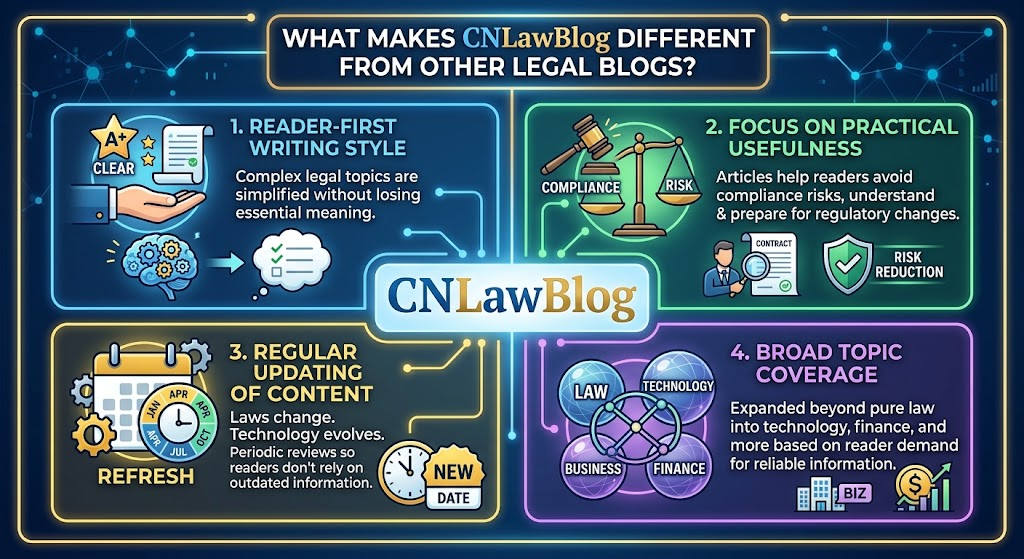
Several features set CNLawBlog apart. First is the reader-first writing style. Complex legal topics are simplified without losing essential meaning. Second is the focus on practical usefulness. Articles help readers avoid compliance risks, understand contracts, and prepare for regulatory changes.
Third is the regular updating of content. Laws change. Technology evolves. CNLawBlog reviews and updates articles periodically so readers are not relying on outdated information.
Fourth is the broad topic coverage. The platform has expanded beyond pure law into technology, business, finance, and more. This happened because readers were searching for reliable information across multiple subjects.
CNLawBlog vs. China Law Blog: Understanding the Confusion
There is some naming confusion here. CNLawBlog is often used as a nickname for the China Law Blog. The original China Law Blog was established by attorney Dan Harris and is now published by Harris Sliwoski LLP.
The China Law Blog is a daily weblog of news, analysis, and opinion concerning China. It began publishing on January 10, 2006. The blog’s focus is primarily law and business in China.
However, there are also other websites using the CNLawBlog name. Some operate under different domains like cnlawblog.co.uk and cnlawblog.net. This can create confusion. Always check which site you are visiting.
How to Use CNLawBlog Safely and Effectively
Using CNLawBlog effectively requires a few simple steps. First, always remember that the content is educational, not legal advice. Second, cross-reference important information with official sources when making business decisions.
Third, check the publication date of articles. Laws change frequently in China. Fourth, consider using the blog as a starting point for your research, not the final word.
If you are dealing with a serious legal matter, consult a licensed attorney who practices in China. CNLawBlog can help you understand the basics. But it cannot replace professional legal counsel.
FAQs
Is CNLawBlog free to use?
Yes, CNLawBlog is completely free. You can access all articles without paying anything.
Does CNLawBlog provide legal advice?
No. CNLawBlog provides educational content only. Every article includes a “not legal advice” disclaimer.
Who runs CNLawBlog?
The original China Law Blog is run by Harris Sliwoski LLP, an international law firm founded by attorney Dan Harris. Other sites using the CNLawBlog name may have different operators.
What legal topics does CNLawBlog cover?
CNLawBlog covers corporate law, data protection, intellectual property, employment law, contracts, FDI regulations, and more.
Is CNLawBlog updated regularly?
Yes, the platform publishes fresh content regularly and updates existing articles when laws change.
Can I trust the information on CNLawBlog?
The site cites real sources and links to statutes and court decisions. However, author transparency is limited. Always verify critical information with official sources.
The Future of CNLawBlog
CNLawBlog continues to evolve. The platform has expanded from pure legal content into technology, business, finance, education, health, and more. This reflects what readers actually want: reliable information, regardless of the subject.
The editorial approach is straightforward. Research carefully. Write clearly. Review consistently. Update when necessary. These principles guide every article published on the site.
As China’s legal landscape continues to change, resources like CNLawBlog become even more valuable. The platform fills a genuine need for accessible, plain-language legal information.
Conclusion
CNLawBlog is a valuable resource for anyone trying to understand Chinese law. It breaks down complex topics into simple, readable explanations. It covers a wide range of subjects from corporate law to data privacy. And it is completely free to use.
However, always remember that CNLawBlog is educational, not legal advice. Use it to build your understanding. Use it to prepare for conversations with lawyers. But never rely on it alone for important legal decisions.
Have you used CNLawBlog before? What topics would you like to see covered? Share your thoughts in the comments below. And if you found this guide helpful, consider sharing it with someone who might benefit from understanding Chinese law better.